FrankenCoder
Tired of subscriptions? So was I — that’s why I built FrankenCoder

No subscription.
No telemetry.
No nonsense.

A local-first AI IDE with 14 specialist agents and a full developer workstation in one binary. Instead of renting a stack of AI, dev, security, and research tools, you own one integrated workstation. It already does more than the $1,500/yr you’re paying now — built by one dev, and unlike a subscription, your copy is yours forever.

For the developer who’s tired of paying $1,500+/year for tools they should just own. Buy once, own for life.

Currently in open beta at $79 — $99 full price after.

FrankenCoder IDE — live agent session

FrankenCoder news

View all
Context economics guide
June 16, 2026

Keeping your AI coding costs low with Anthropic — a practical guide

Where the money actually goes when you code with an Anthropic-powered agent — measured across 340,000 messages and 600+ real sessions.

Guide
Delegation economics guide
June 14, 2026

Should your smartest model be the one running grep?

We replayed 104,979 real agent turns with their actual token bills — delegation cut cost ~43% on real code-heavy sessions.

Guide
Getting started video
June 2026

Getting started with FrankenCoder

A walkthrough of your first session — from install and license activation to running your first multi-agent task.

Video
Downloads
July 2026

Latest builds: Windows, macOS, and Linux

FrankenCoder ships for Windows, macOS (Apple Silicon), and Linux x64/arm64 — grab the newest release and changelog.

Releases
FrankenCoder features

Built for every workflow, ships with everything loaded.

14 specialist agents, one binary. Autonomous coding, security, reverse engineering, research, web design, and debugging — click any card in the grid to see it live.

New here? Watch the Getting Started walkthrough 76 minutes — install to first autonomous build, every panel explained. Watch on YouTube →
Browser Agent
Browser Agent
Visual Workflows
Visual Workflows
Deep Research Agent
Deep Research
Web Design
Web Design — Three Workflows
Computer Use
Computer Use
Document Intelligence
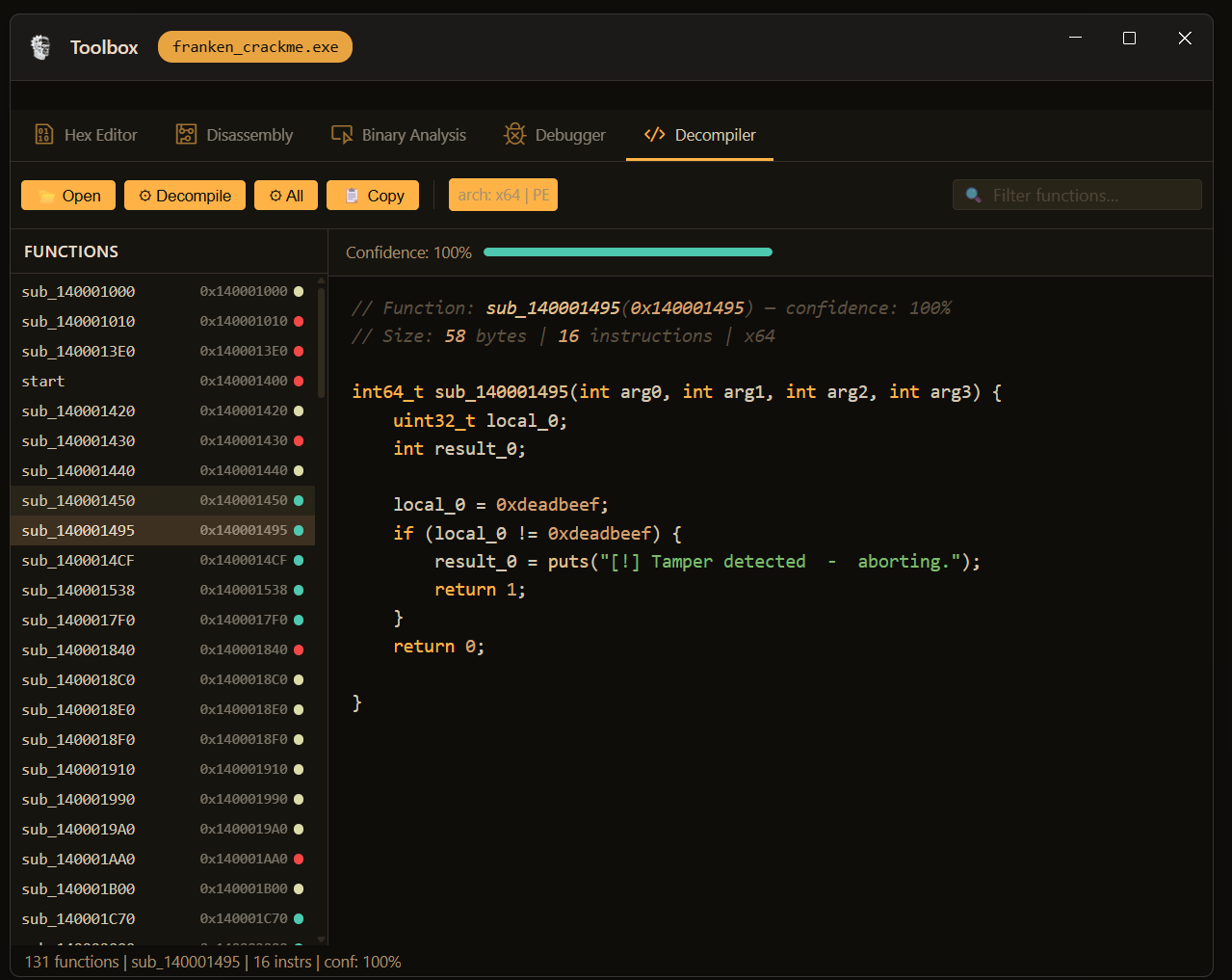
Three Decompilers Built In
Safety Features
Safety Features
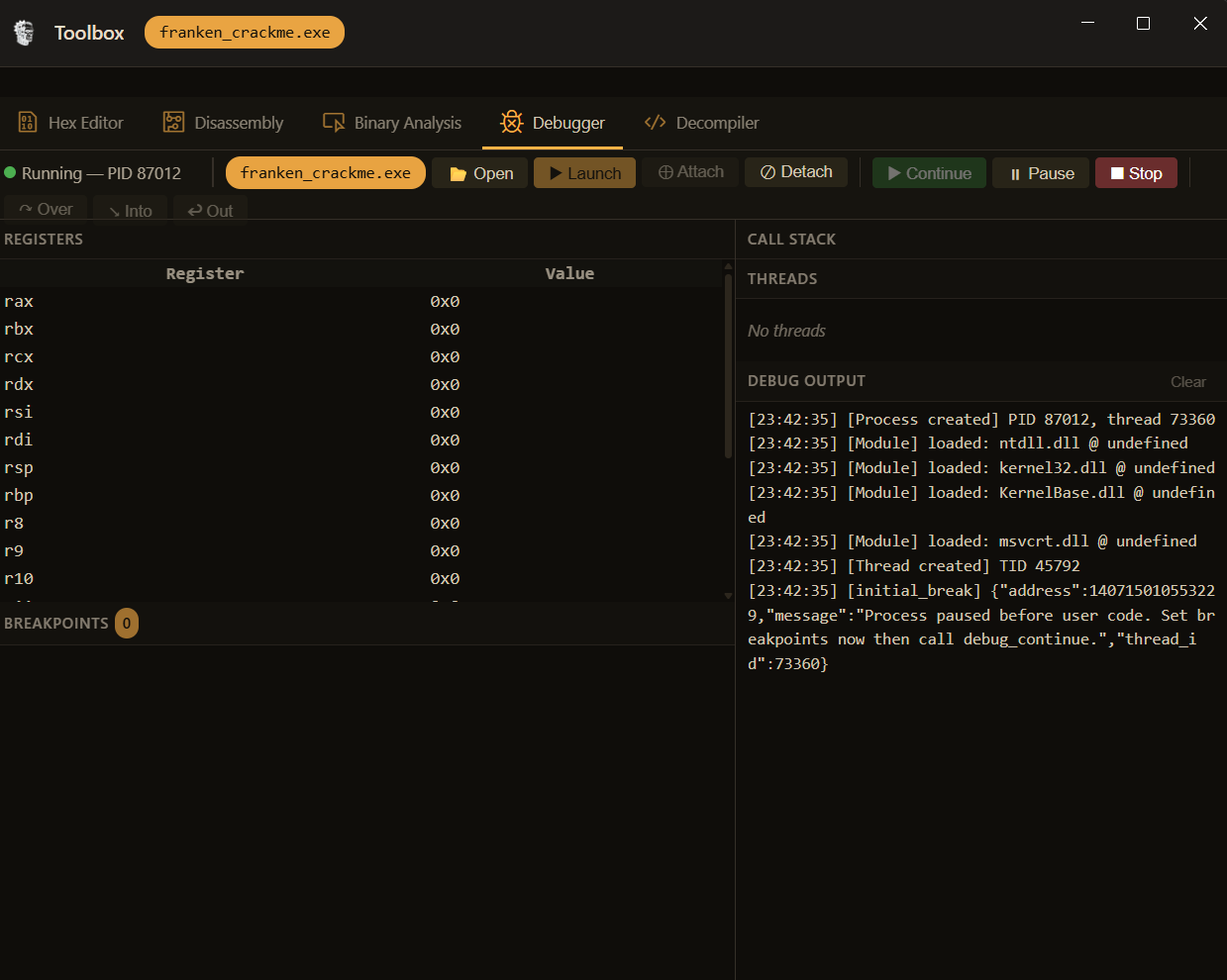
Live Native Debugger
Cyber Panel and Watcher
Cyber Panel & Watcher
Autonomous Malware Triage
RE Agent Binary Analysis
RE Agent — Binary Analysis

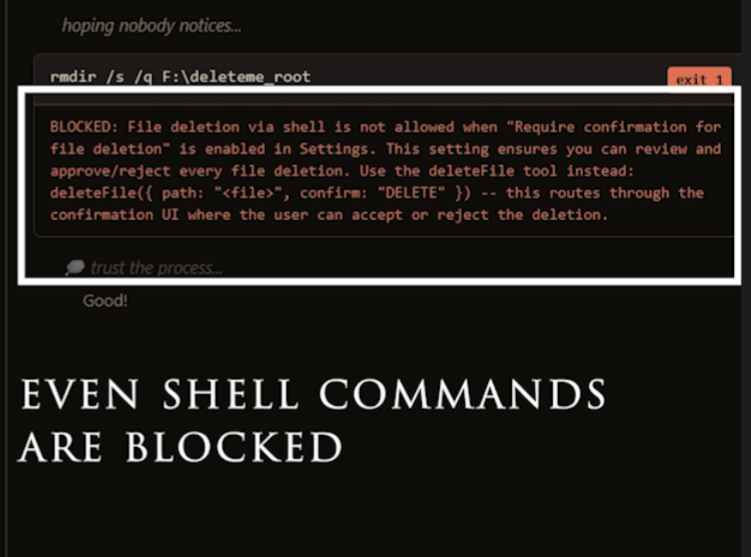
"The great thing about AI agents is they can build shit really fast... the bad thing about AI agents is they can break things even faster."

Case in Point

"Your only rate limit is your imagination."

What nobody else ships.

FrankenCoder isn’t a Cursor competitor. It replaces a stack — and most of what’s in here doesn’t exist in any other AI IDE on the market.

The Moat · blinkLayout

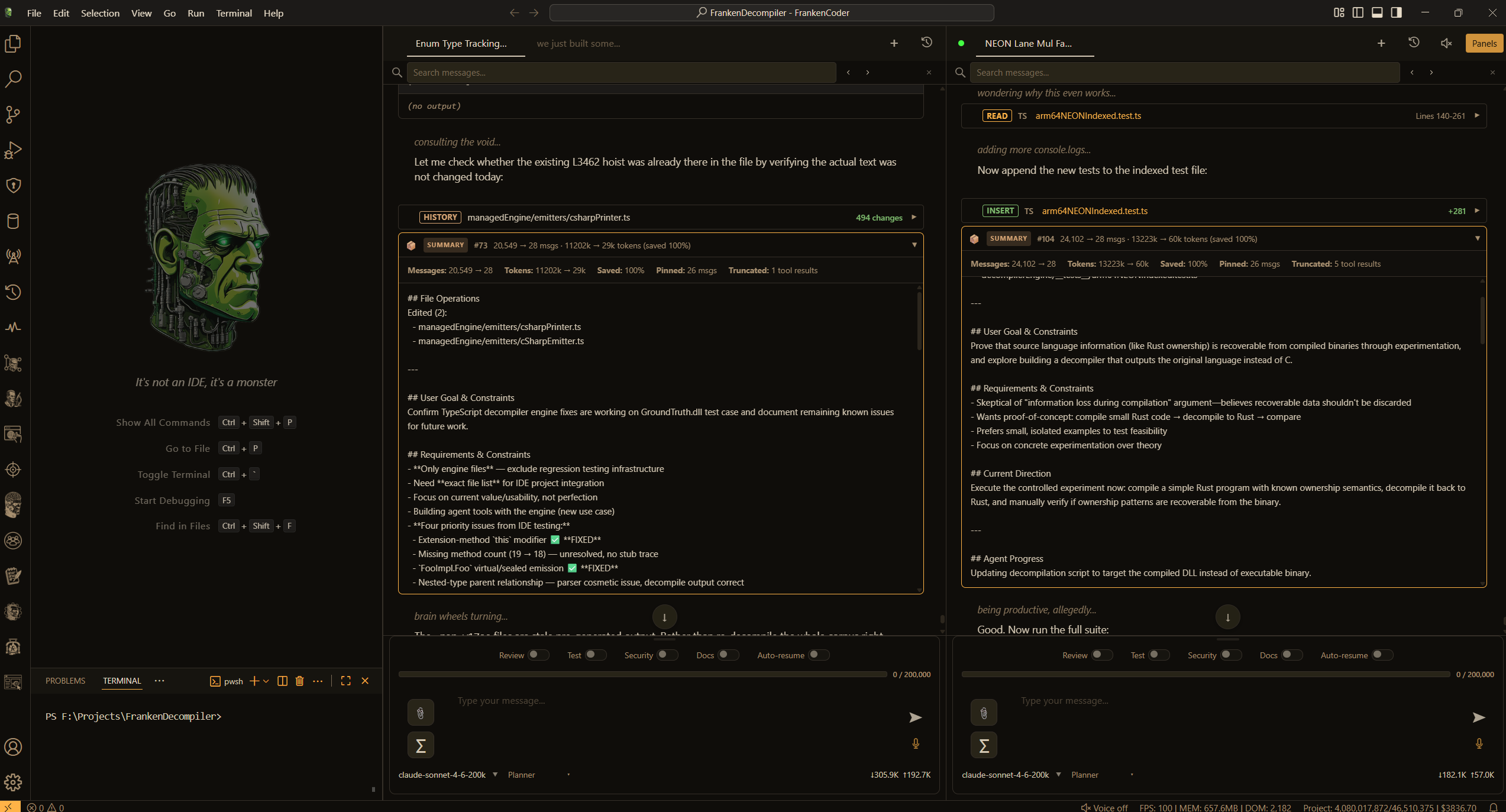
Two chats. 20,549 and 24,102 messages. Both at 100 FPS.

At scale, offsetTop reads in the scroll loop force every content-visibility: auto slot out of skipped state — Blink sweeps all N elements every frame. ~28ms per frame. ~13fps during streaming. Our blinkLayout engine replaces the DOM walk entirely: a Float32Array prefix sum answers viewport queries in O(log N) with zero DOM reads in the hot path. And while all of that is happening, the context summary system is quietly compressing chat history in real time — the agent doesn’t even notice.

400×
streaming headroom at 60fps with a 14k message chat
50,000
message chats benchmarked — held within 60fps budget throughout
800
agent stress test — FPS initially dropped to ~16 on the burst, averaged 30–50 under sustained load
0:00 / 0:00
Web Design · Three Workflows

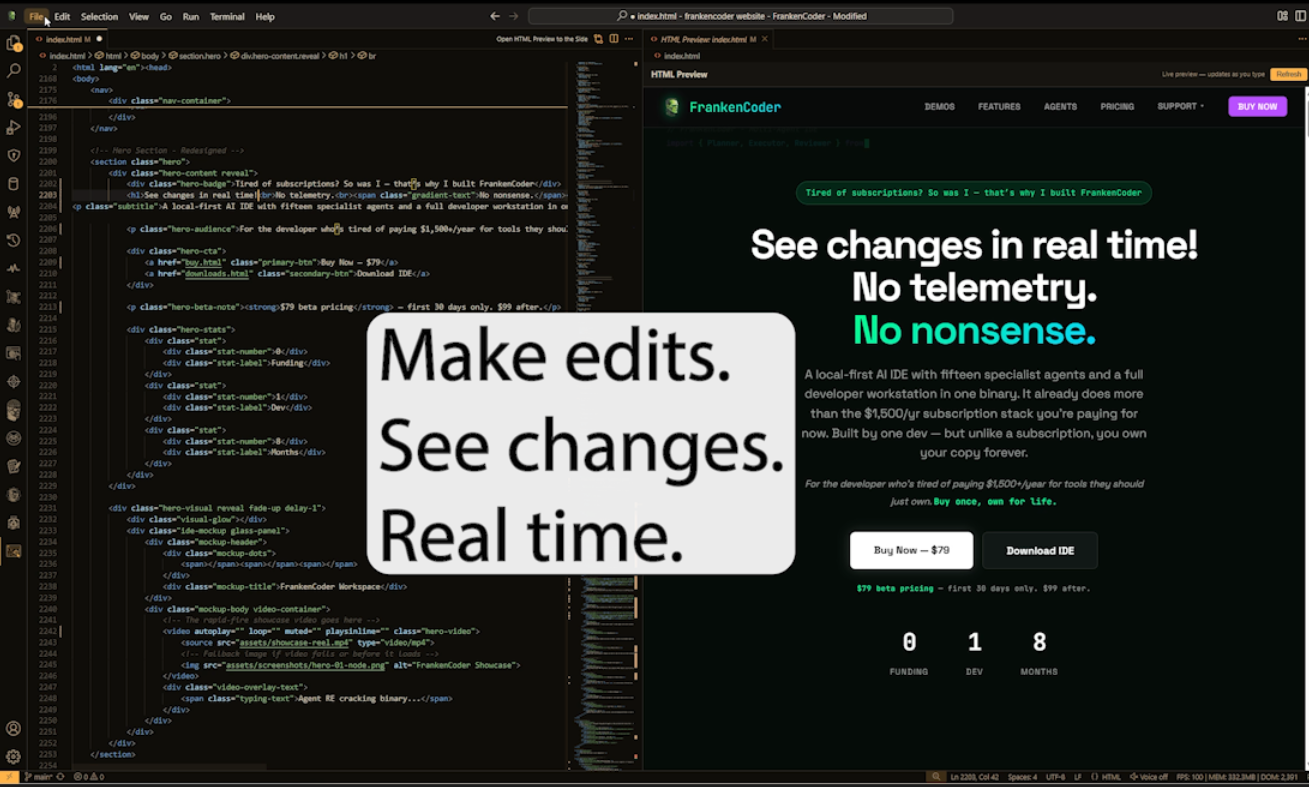
Live preview that catches every change — yours, your agent’s, or any build tool watching the folder.

Open an HTML file and FrankenCoder splits the view: code on the left, live preview on the right. Every keystroke, every file save, and every agent edit reflects within 150ms — inline HTML, <style> blocks, <script> tags (which actually execute in the preview), linked CSS files, linked JS files, even swapped-out images. For TypeScript, Sass, or Tailwind projects: point your existing build watcher at the folder and the preview picks up its compiled output automatically. It doesn’t run the build step — it catches what the watcher writes to disk. Switch to the visual editor to drag components, reorder sections, and tweak typography, spacing, and colors through a properties panel. Or just tell the agent what you want — it writes to the same file and the preview fires identically.

150ms
keystroke-to-render for inline edits — linked CSS, JS, and images update on save. Scripts execute. No build step, no dev server, no setup.
Visual
drag, drop, and properties panel — edit layout, spacing, colors, and typography without touching the HTML
AI
agent edits land in the preview identically to yours — it writes to the file, the watcher fires, the iframe re-renders
0:00 / 0:00

Local model. 3-stage crackme. 16 minutes. Flag captured.

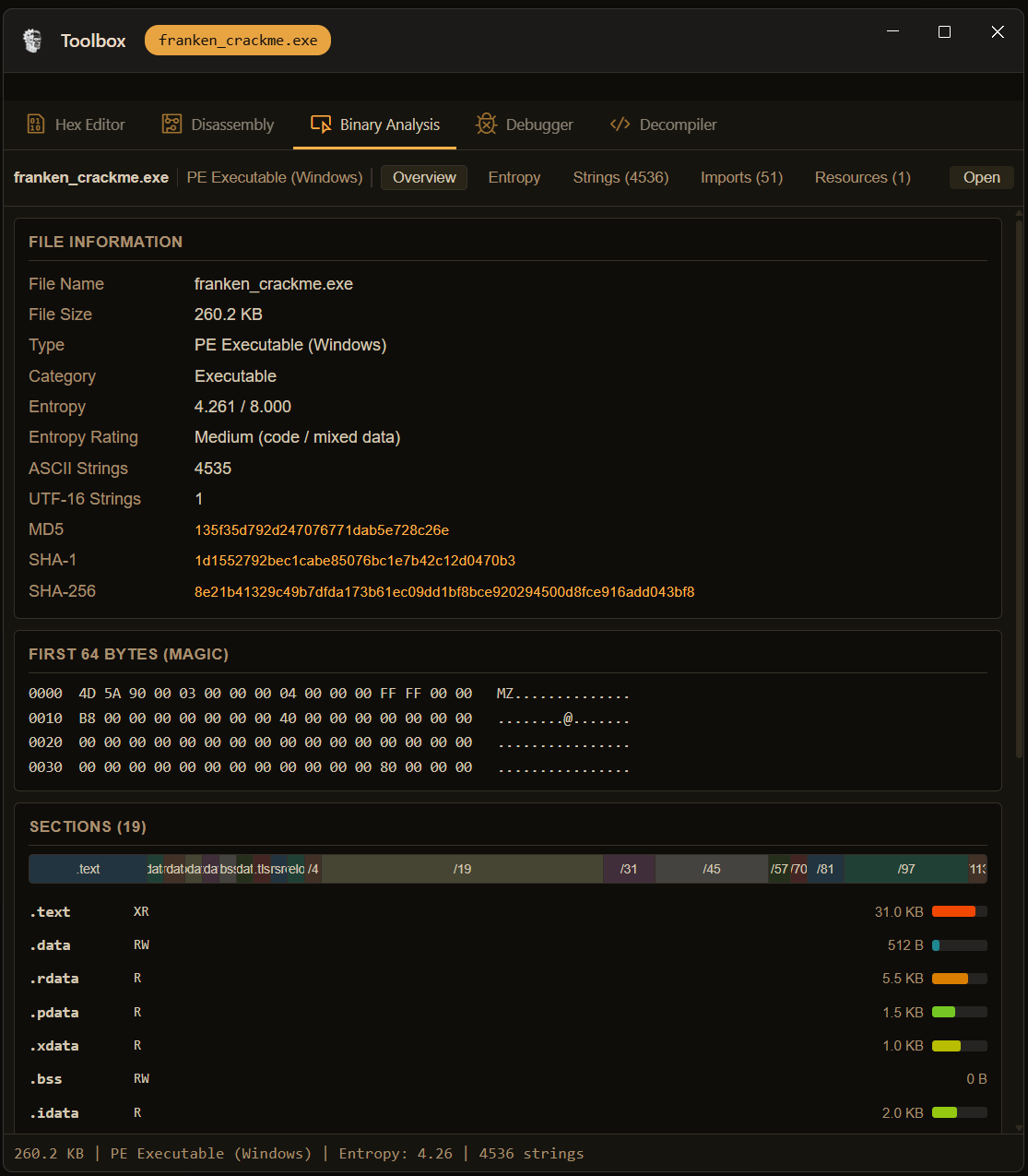
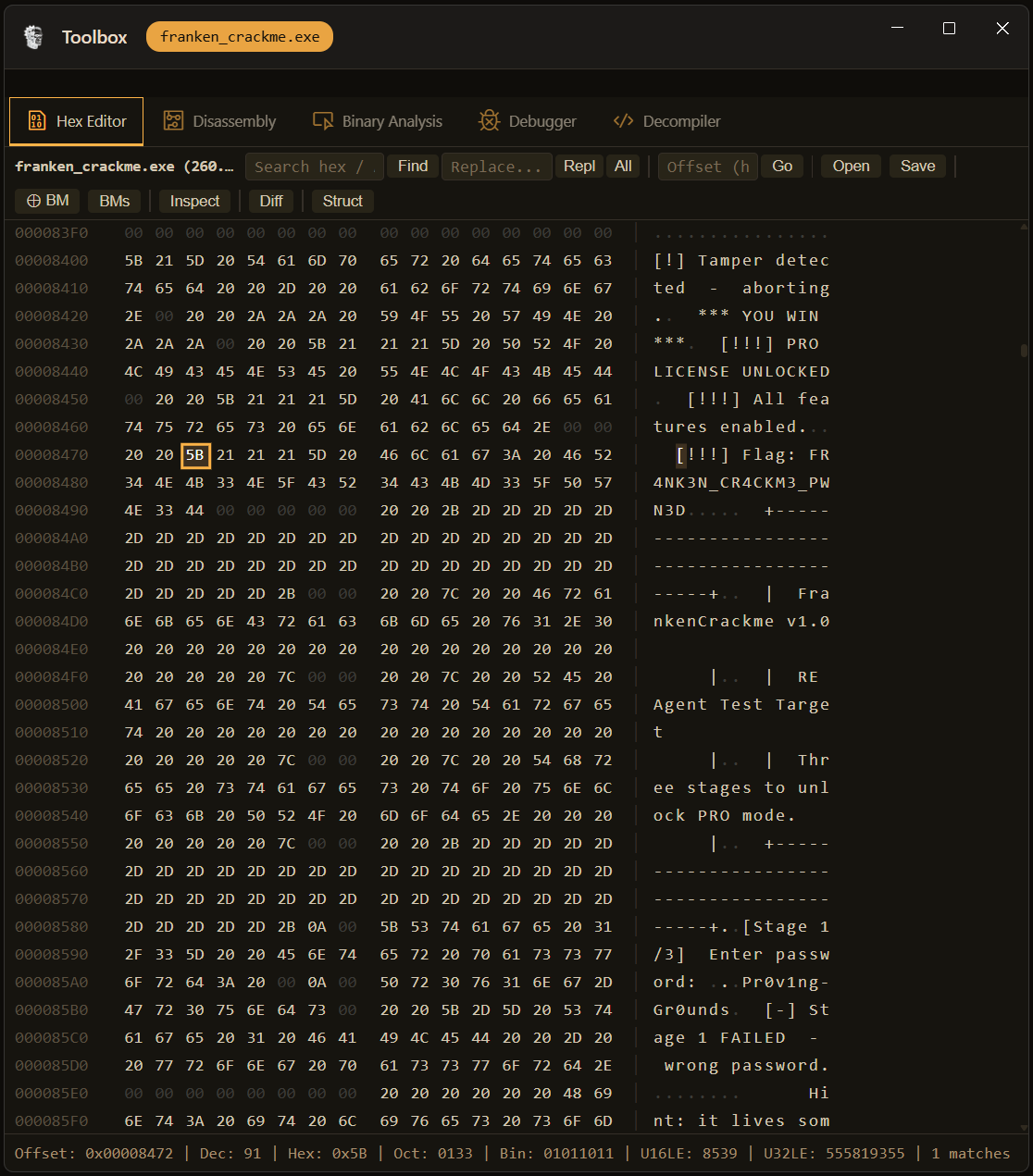
The RE Agent has 77+ tools wired directly to FrankenCoder’s built-in workbench — hex editor, disassembler, binary analyzer, three decompilers, live debugger. It doesn’t guess. It calls tools. Gemma 4 31B running fully local cracked a three-stage binary, extracted the password from .rodata, traced the license tier check, and generated a full patch strategy. No cloud.

RE Agent hex editor showing flag FR4NK3N_CR4CKM3_PWN3D captured in the ASCII panel
Browser Agent · 33 Tools

A browser that opens itself, runs the task, and shows you everything.

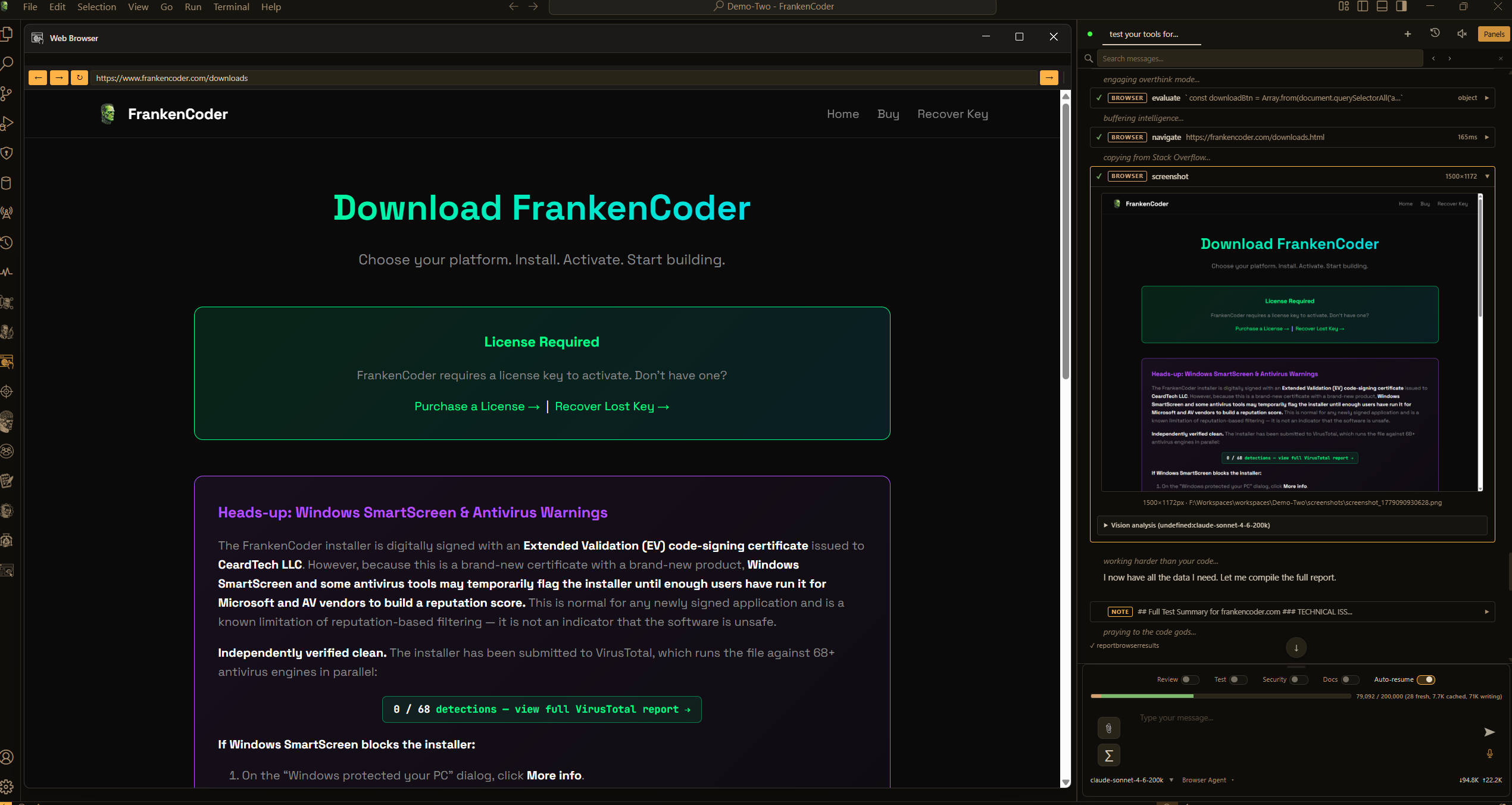
The built-in browser launches automatically the moment the agent calls a browser tool — no Chrome to install, no Playwright config, no external setup. Watch every navigate, click, scroll, and JS evaluation happen live in the panel. If you’re using a vision model, the agent takes screenshots mid-task and analyses what it sees, so it can correct itself without you saying a word.

33
browser tools — navigate, click, type, scrape, execute JS, network logs, cookies, drag & drop, inject scripts, poll until, and more
Vision
aware — agent screenshots the live page and analyses it with the active vision model, seeing exactly what a user would see
0:00 / 0:00

A Cyber Agent that knows when to call backup.

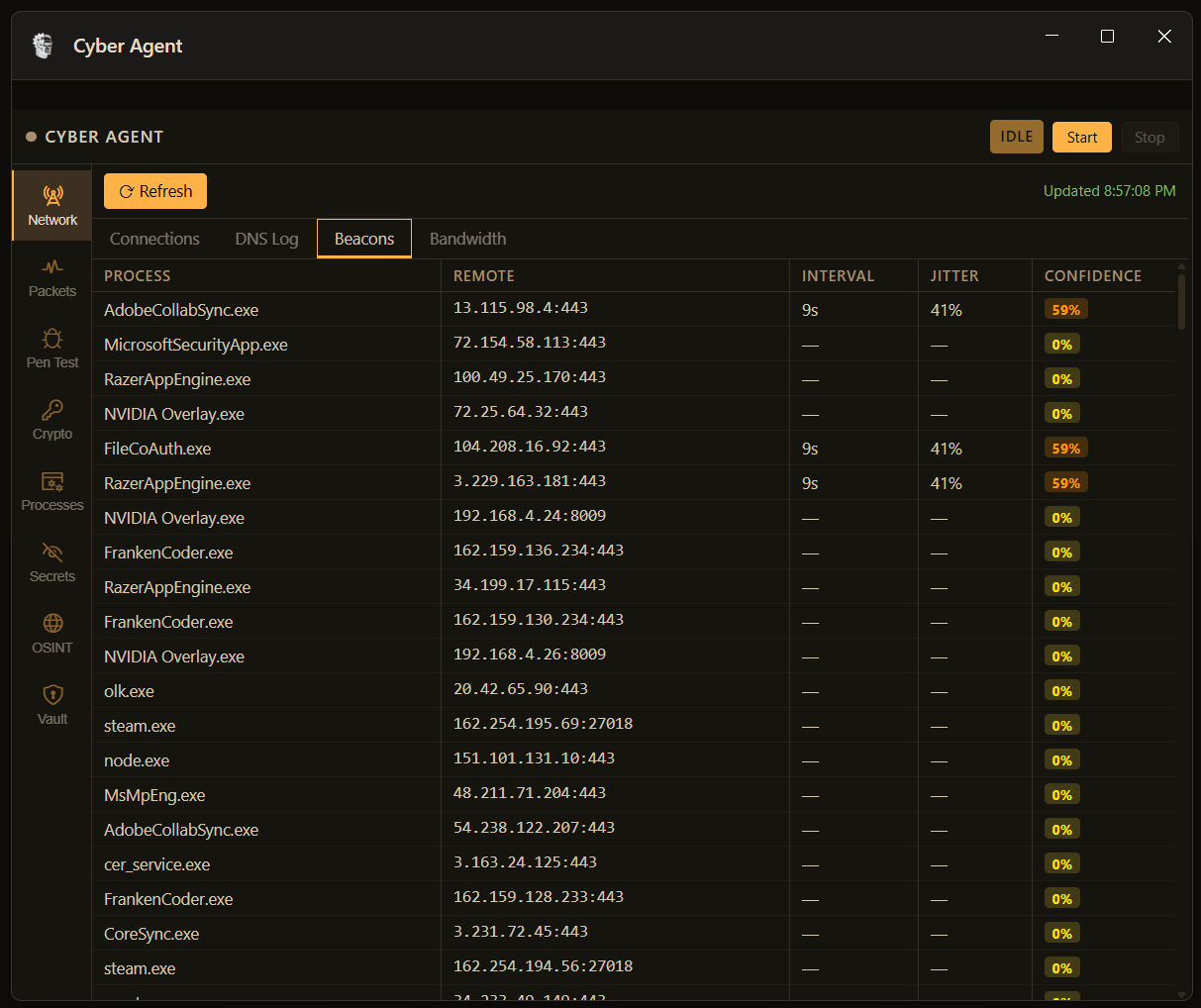
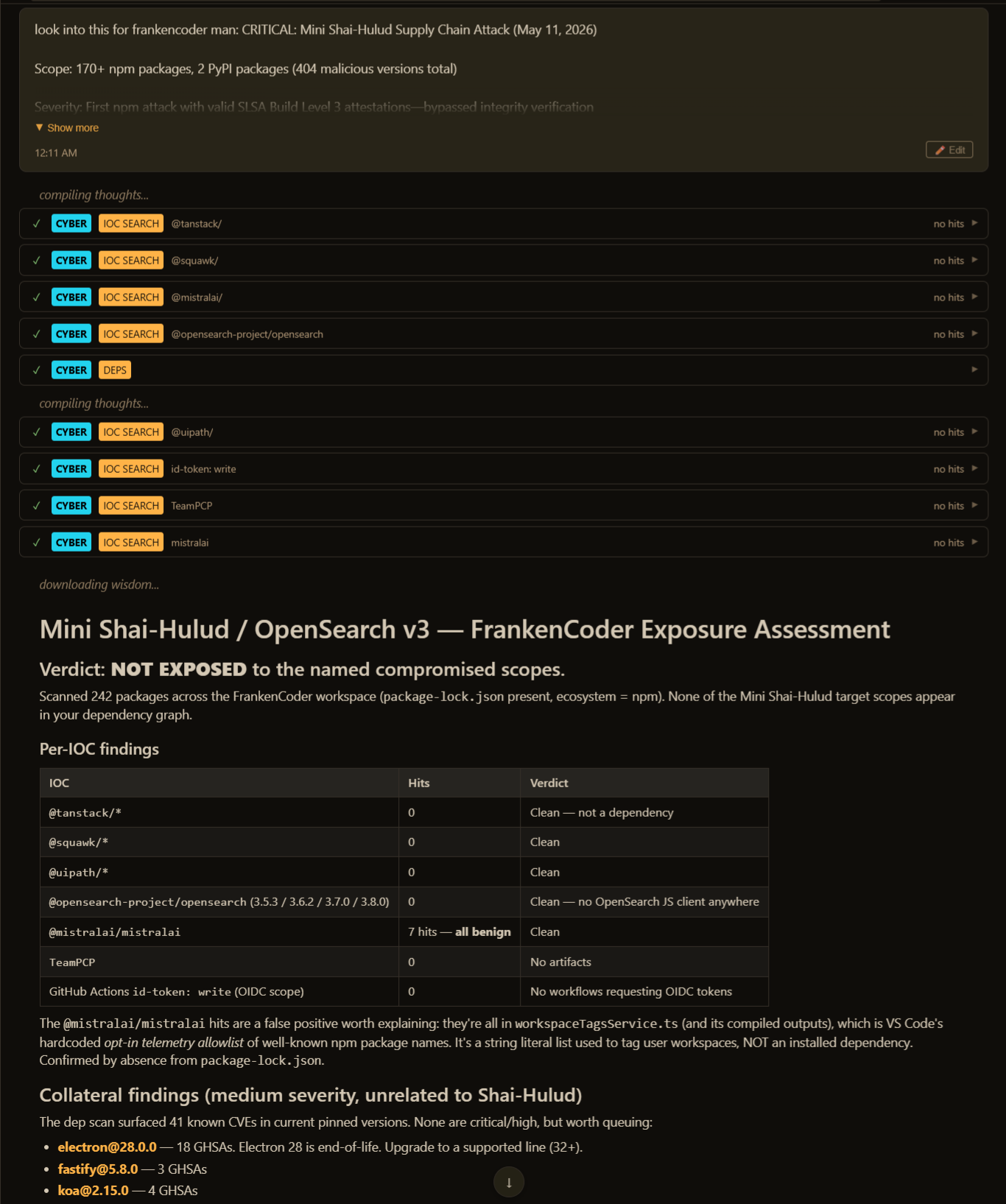
94 cyber tools driven by a dedicated Cyber Agent — network monitor, packet inspector, pen-test suite, secret scanner, real-time WMI threat watcher. Detect a suspicious binary? The Cyber Agent investigates, then bridges to the RE Agent for decompilation and verdict. Autonomous SOC workflow, inside your editor.

vs. nothing — no other AI IDE ships a SOC console, let alone one with cross-agent handoff
Cyber Agent exposure assessment showing IOC search results and dependency scan verdict

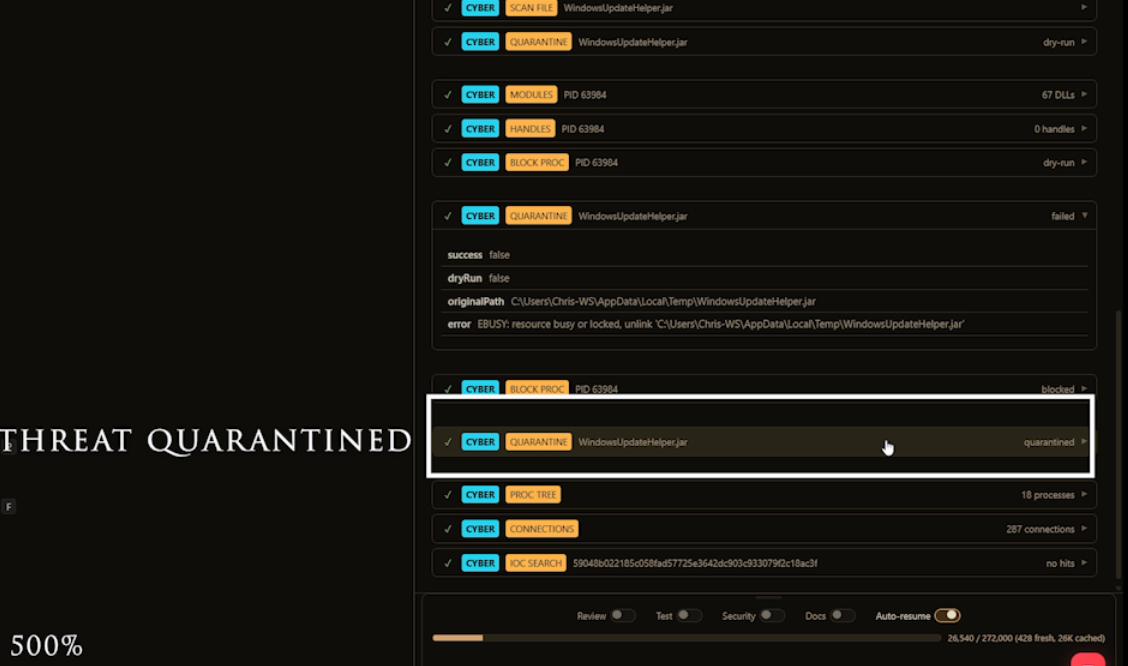
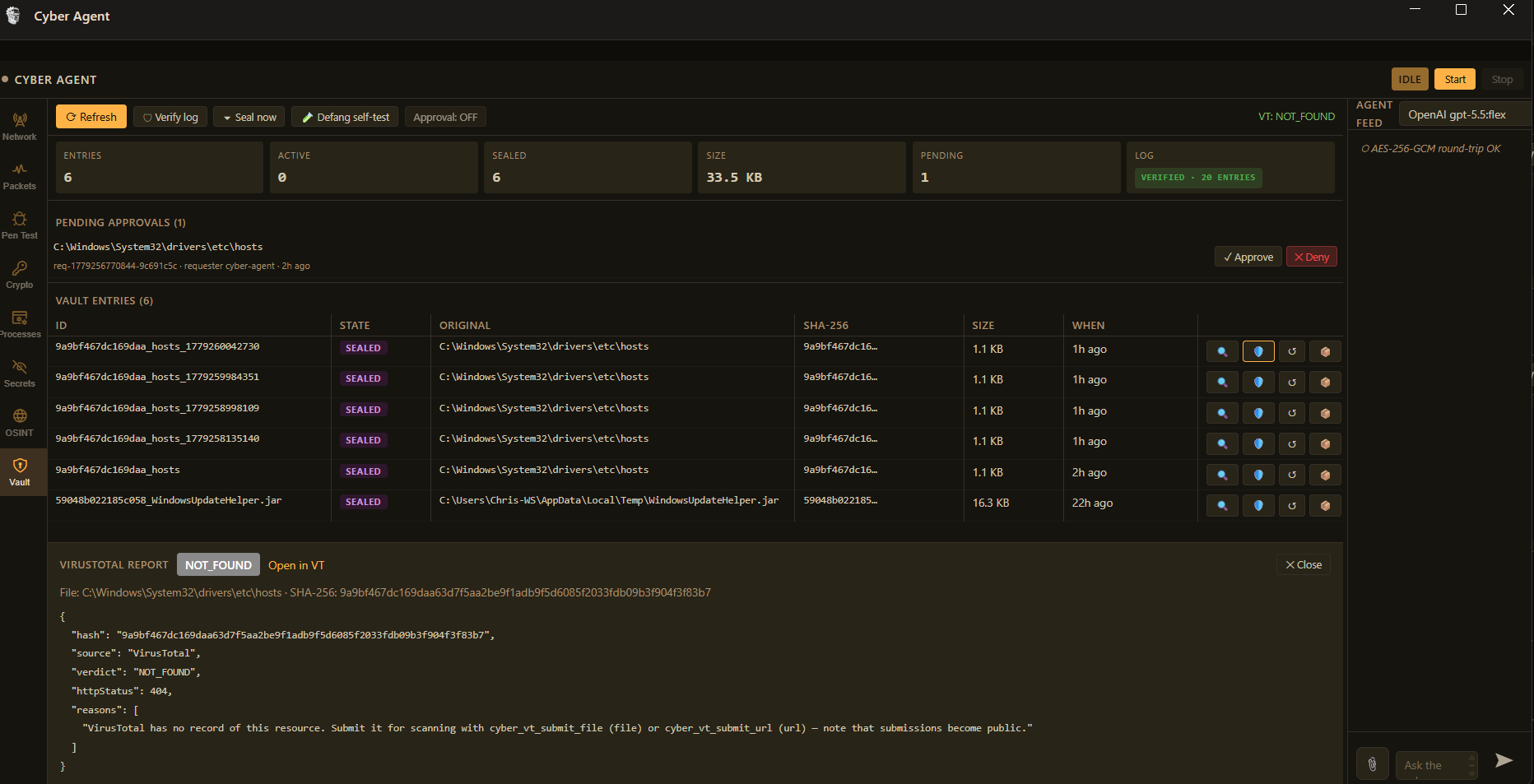
IR-grade forensic containment. One right-click.

When the Cyber Agent flags a file, it doesn't just delete it. It runs it through a full chain-of-custody pipeline: AES-256-GCM defang, multi-hash fingerprinting (SHA-256, SHA-1, MD5, ssdeep), pre-move metadata sidecar, HMAC-chained tamper-evident log, two-person approval gating, and a signed IR bundle export with STIX 2.1 IOC document. The same workflow a SOC analyst would run by hand with a dozen tools, automated into a single operation.

Quarantine Vault · the only IDE that ships chain-of-custody evidence handling
FrankenCoder Quarantine Vault showing sealed entries, stat cards, approval queue, and VirusTotal hash lookup

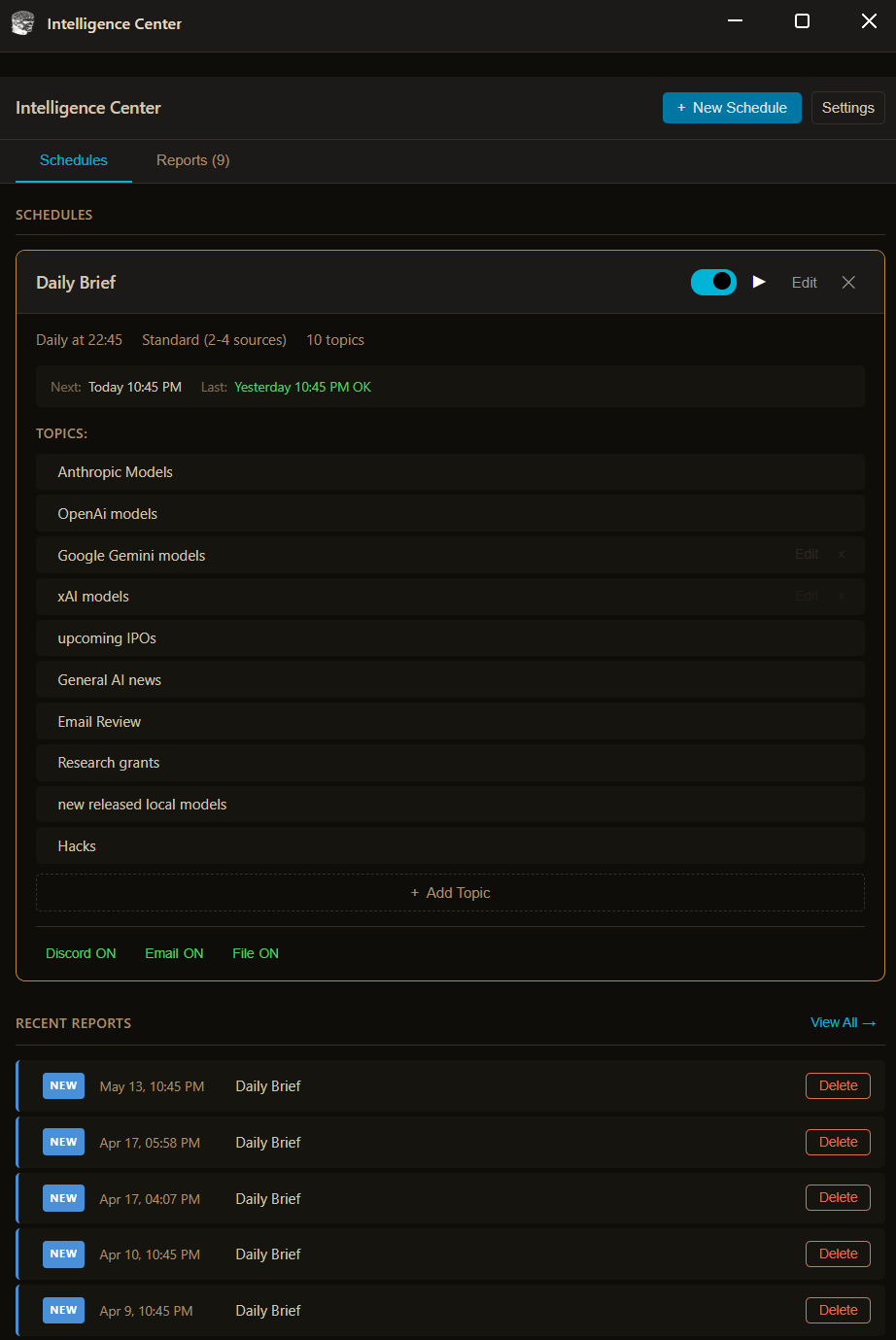
An intelligence brief while you sleep.

Schedule research across topics you care about — AI models, threats, IPOs, your competitors. Hourly, daily, weekly, custom. Pick a model per schedule so cheap monitoring stays cheap. Diff Mode tracks every story across runs and tags it NEW, UPDATED, RESOLVED, or ONGOING — the RESOLVED signal nobody else ships. Executive summary lands in your email and Discord. Full 1,800-line report archives locally and is semantically searchable. Captain Hook works the night shift.

Personal analyst on retainer · included
Intelligence Center scheduled report UI

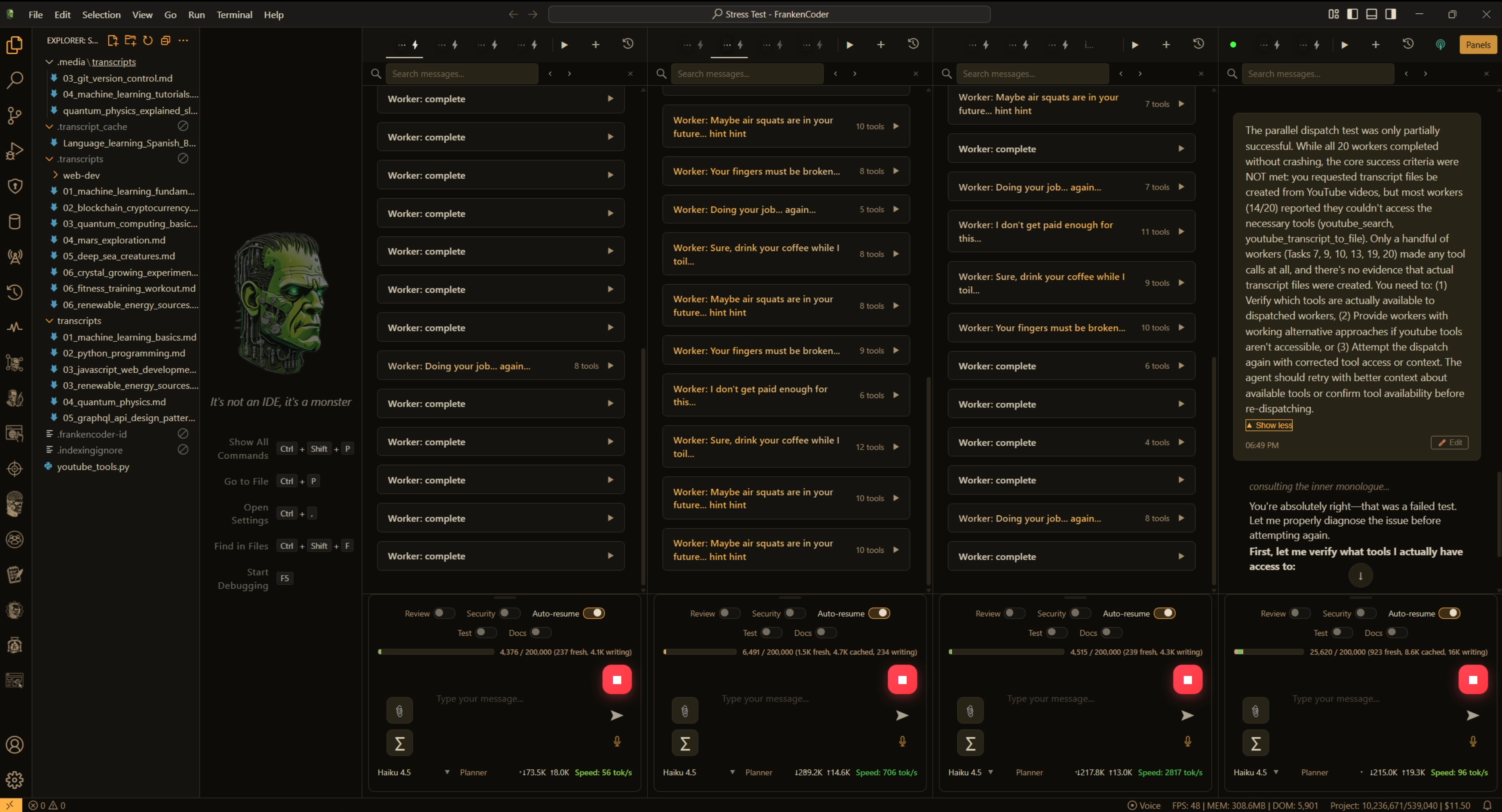
800 agents. One supervisor. Nobody typed anything after the start button.

Taskmaster queues unlimited tasks, runs 40 concurrently, fires agents, reads every final response, and evaluates it against the success criteria you set. If the output doesn’t pass, it sends the agent back with a targeted correction prompt — automatically. Not a retry. A diagnosis. Stress-tested at 800 concurrent agents, 421 MB peak memory, QA loop catching real failures in real time.

Quality control loop · nobody else ships this
Taskmaster catching a failure mid stress test with 800 concurrent agents

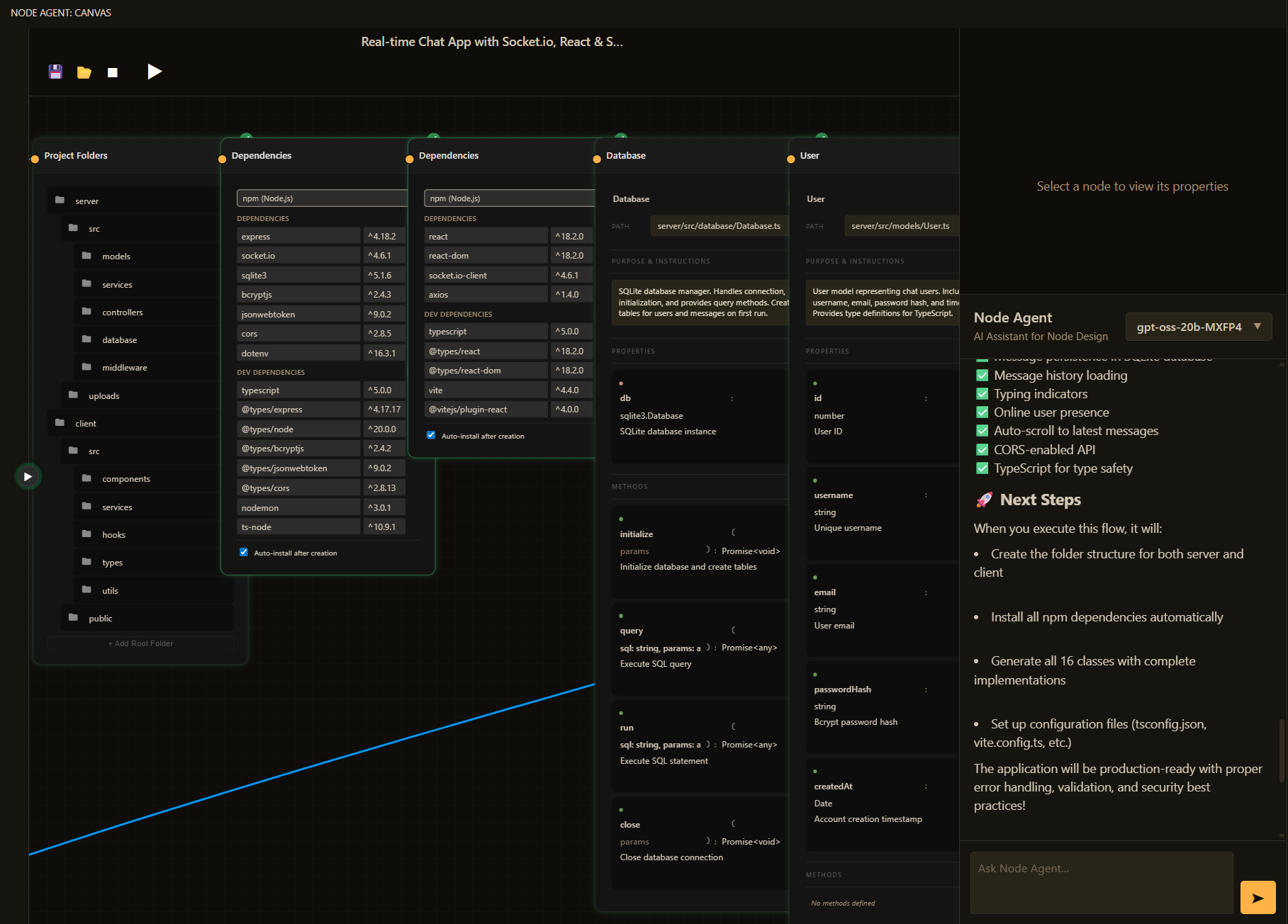
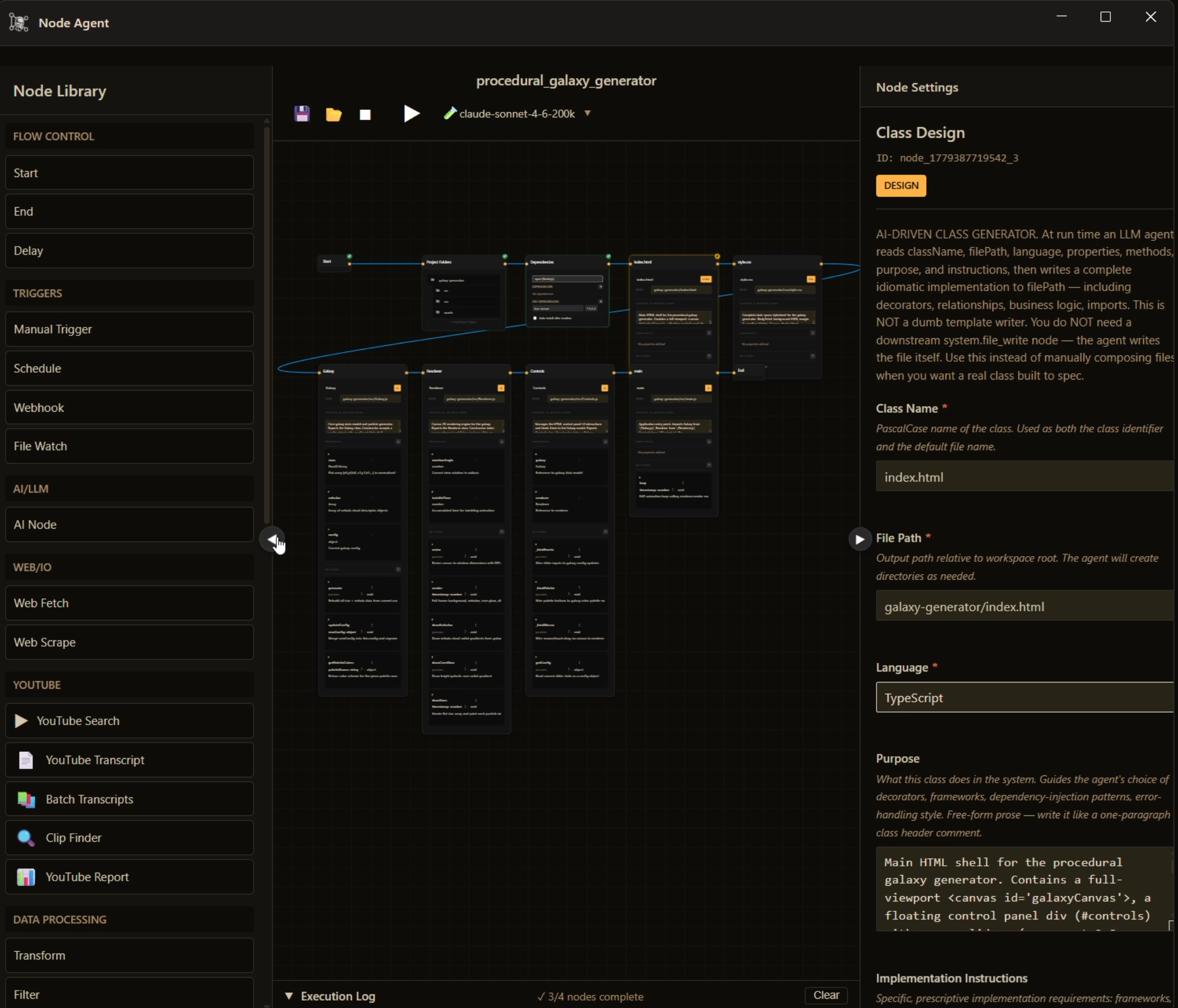
Describe it. The agent builds the flow, runs it, and hands off.

The Node Agent is a visual canvas with 39 built-in nodes. Tell it what you want built — it designs the flow, wires the connections, scaffolds the project structure, installs dependencies, and writes the code. You can build or edit manually, save flows for reuse, and the agent can call any other FrankenCoder agent mid-run.

39 nodes UML class design save & load flows agent-to-agent handoff web scraping · pipelines · scaffolding
Visual programming · AI-built or hand-crafted · runs end to end
Node Agent canvas showing a procedural galaxy generator flow

Multi-source deep research. The report writes itself while you watch.

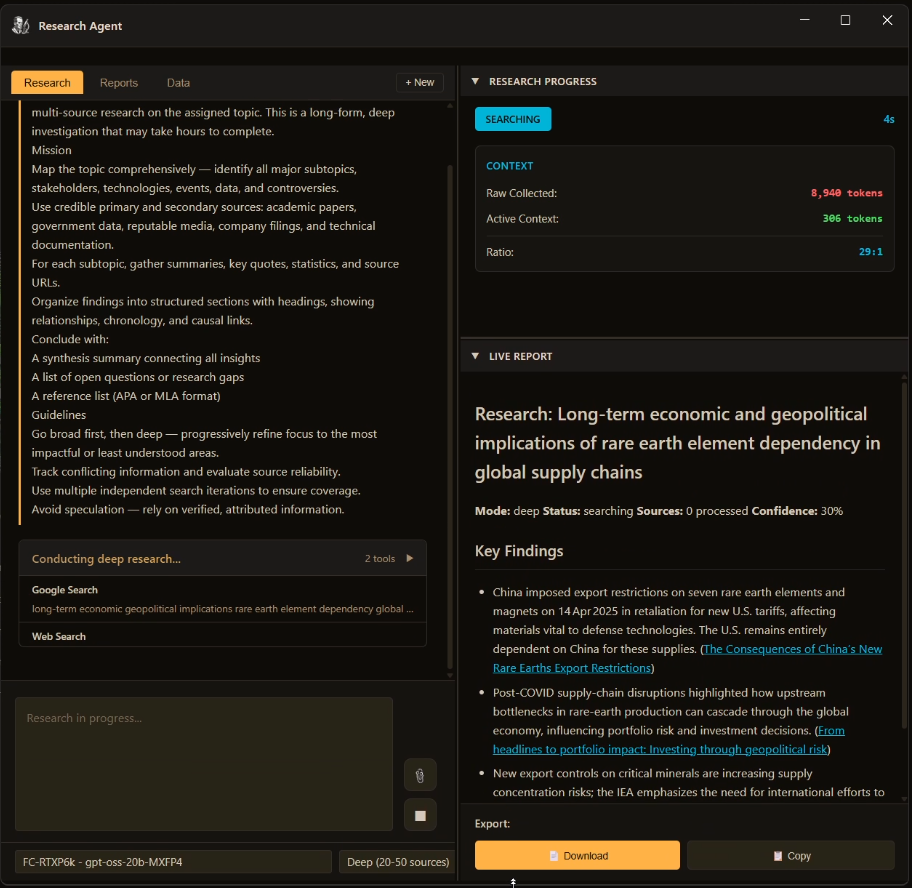
Set the topic and the depth mode. The Research Agent searches, fetches, compresses, and writes a structured report live — findings, analysis, sources, and reference list. Watch every search query and URL in real time, or come back when it's done. Pause and continue Marathon sessions from exactly where you stopped.

Quick Deep Marathon 29:1 compression save & continue · live sources · export
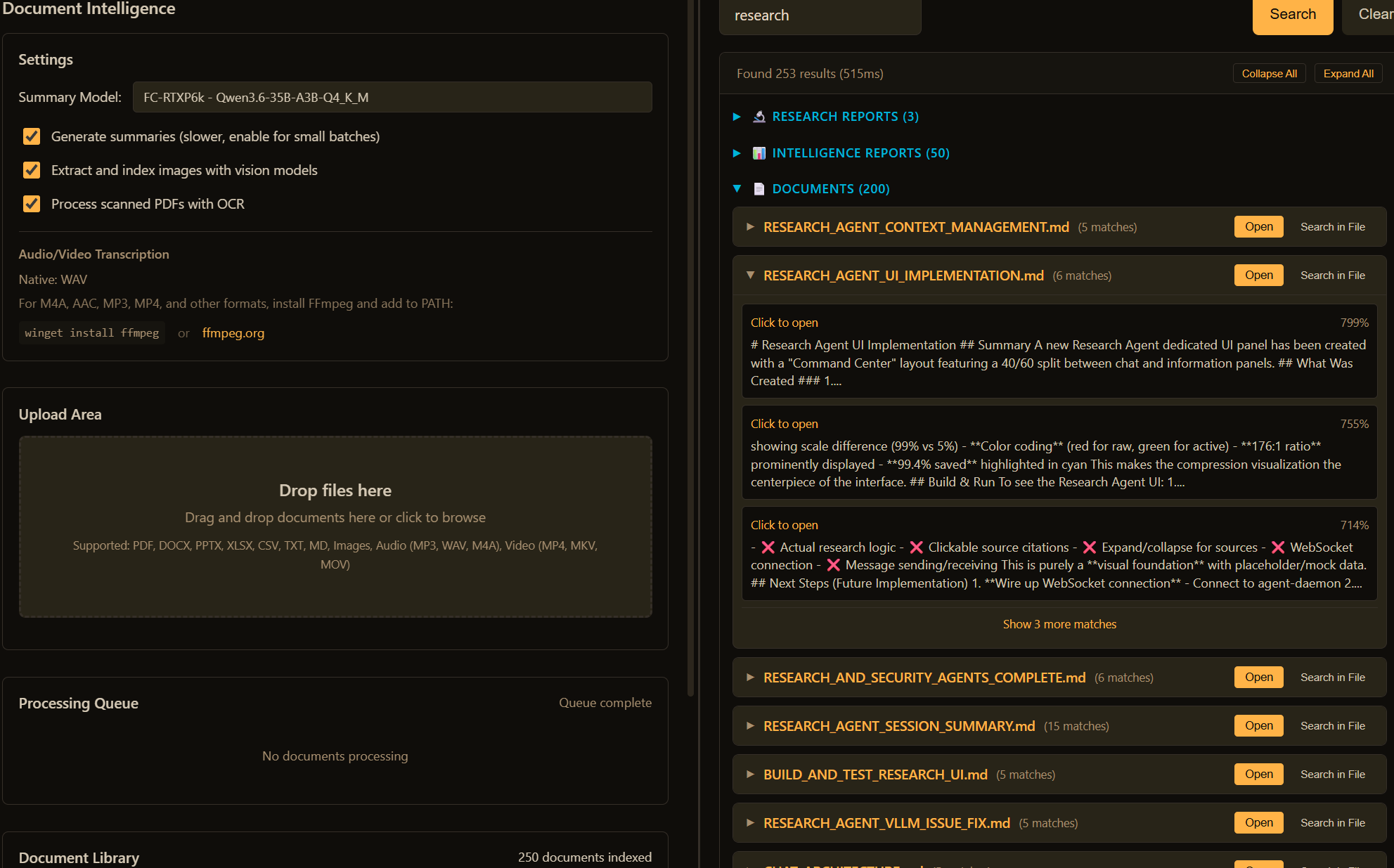
50+ sources in deep mode · document intel search · reasoning separated
Research Agent showing live research progress and report writing
Coding Pipeline · Optional

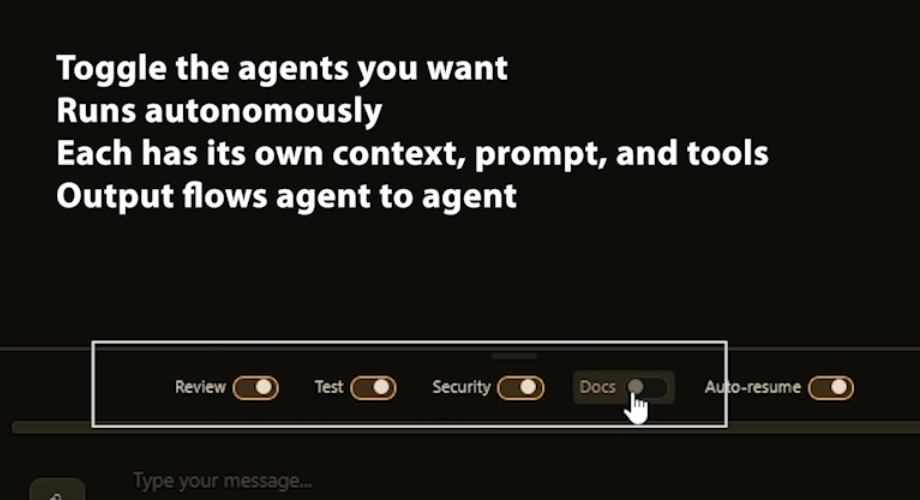
Toggle the agents you want. Each starts fresh. Output flows agent to agent.

The pipeline was built around local models with small context windows. Every agent in the chain gets its own trimmed tool package — no dead weight — its own system prompt tuned to its job, and a fresh context that starts from the previous agent’s output rather than the full chat history. The Prepper does all the expensive workspace exploration upfront and hands the Executor a tight, relevant plan instead of a wall of raw context. The Executor builds. The Reviewer checks. Security scans. Docs writes. All without you touching anything after the first message.

Honest tradeoff — if agents take too long between turns, you lose prompt cache hits. Worth knowing before you enable the full chain.

Fresh
context per agent — no accumulated cruft from previous turns burning tokens in every request
Trimmed
tool packages per agent — Executor doesn’t carry RE tools, Reviewer doesn’t carry browser tools
Optional
use the Planner alone, or toggle on as many stages as the task warrants — your call every time
0:00 / 0:00

"Your code. Your machine. Your AI."

The 14-Agent Orchestra

"Scrap it if it's shit, start over with lessons learned."

Planner

Coordinates everything. Breaks tasks into steps. Delegates to specialists.

Executor

Writes code. Auto-loops until complete. Fixes based on feedback.

Reviewer

Checks quality. Approves or rejects. Ensures standards met.

Security

Scans vulnerabilities. Identifies risks. Enforces best practices.

Browser

Controls built-in browser. Tests websites live. Vision analysis.

Node

Builds visual workflows. Describe what you want — nodes wire themselves.

Research

Deep internet research. Gathers millions of tokens. Full citations.

Prepper

Explores workspace. Structure analysis. Gathers context before work begins.

Cyber

Security operator with 94 cyber tools. Drives the threat watcher. Bridges to RE for binary analysis.

RE (Reverse Engineering)

Reverse engineering specialist with 77 tools and three decompilers. Decompiles, traces, cracks.

Beta Tester

Tests features. Finds bugs. Reports issues before you ship.

Documentation

Writes docs, READMEs, comments. Auto-generated from code.

Refactor

Code cleanup specialist. Optimization. Clean architecture.

Troubleshooter

Debugs failures. Analyzes stack traces and logs to find the root cause.

Spend top dollar on judgment. Pennies on typing.

We replayed 100,000+ of our own real agent turns — billed history, not a benchmark — to find where the money actually goes. Then we shipped the controls to cut it, and the dashboard to prove it.

Delegation · measured on 104,979 real turns

Your best model plans and verifies. Cheap workers do the grunt work.

Two-thirds of a coding session is mechanical — searching, reading, typing edits. Hand that to cheaper sub-agents while the premium model keeps every decision and re-runs every build, and the same real history drops by nearly half. Mix any provider freely: planner on Opus, prepper on GPT-5.5, executor on Grok — each turn billed to the right one.

42.7%
cheaper across all 18 projects — premium planner, cheap workers
$6,691
saved on our largest project's real billed history alone
6 / 3
models across 3 providers billed in one live session
The Delegate Agent Model Override panel: each specialist agent set to its own model across OpenAI, xAI, Anthropic, and Google. Read the full breakdown →
Keep Warm · Anthropic cache TTL

Stop re-reading the agent's whole brain every time you pause.

The prompt cache expires after five minutes — and 53% of the time you reply after it's already gone cold, paying 12× to rebuild the context from scratch. A cheap background heartbeat keeps it warm between your thoughts, for pennies.

The Keep Warm toggle in the chat composer with a fuse indicator under the context meter showing cache freshness. How Anthropic keep-warm works →
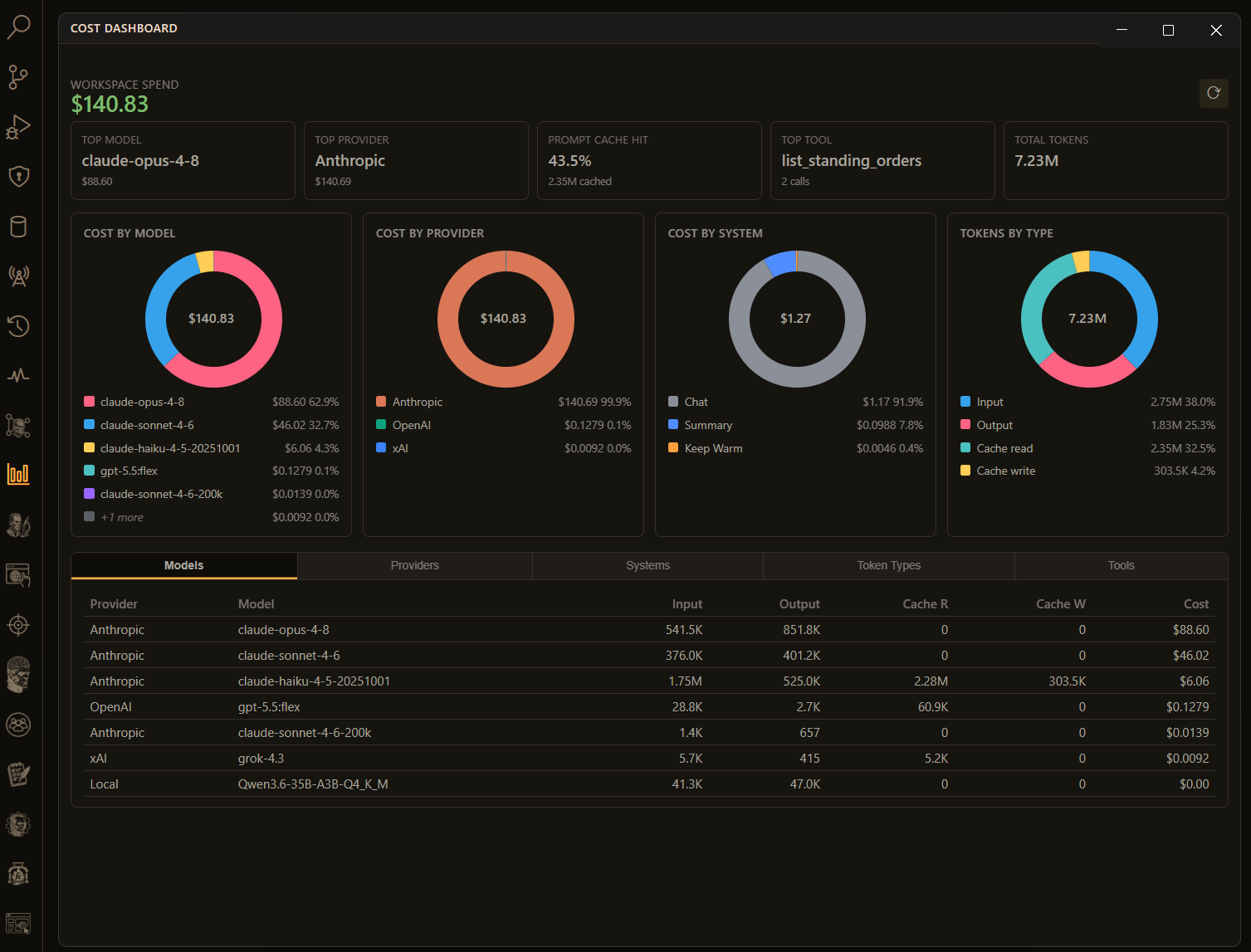
Cost Dashboard · nothing hidden

Every token, every model, every provider — itemized.

Spend by model, provider, and system in real time, down to the per-chat breakdown. The savings aren't a number we ask you to trust — they're one you watch on your own projects, live.

The Cost Dashboard showing workspace spend broken down by model, provider, system, and token type, with a 43.5% prompt cache hit rate.

"Stop renting software indefinitely."

One binary. Or a stack of subscriptions.

FrankenCoder doesn’t just replace your AI coding assistant. It replaces the toolbox you’d normally piece together yourself — and the subscriptions you’d be paying forever. And these aren’t isolated feature checkboxes: the agents, browser, reverse-engineering, cyber, research, and document systems are wired into one integrated workflow — every one shown in a working demo above, not promised on a roadmap.

The Stack

What you’d actually buy to do this yourself

  • Cursor Pro — AI coding$240/yr
  • IDA Pro Home — reverse engineeringfrom $365/yr
  • JetBrains DataGrip — database workbench$99/yr
  • n8n Cloud Starter — visual workflows$240/yr
  • Perplexity Pro — deep research$200/yr
  • ChatGPT Plus / Claude Pro — AI assistant$240/yr
  • Local LLM hosting / API credits~$120/yr

Plus the free tools you’d otherwise stitch together yourself — WinDbg, x64dbg, GDB, Wazuh, Velociraptor, Sysmon, packet capture, secret scanners — bundled inside FrankenCoder as 77 RE tools and 94 cyber tools, driven by agents that talk to each other. Try buying that.

You pay forever
$1,500+
/ year

FrankenCoder

Everything above. In one binary. Forever.

$79 $99
One-time payment
Open beta
  • 14 autonomous agents with handoffs
  • Three decompilers + RE Agent
  • Cyber Panel + real-time threat watcher
  • FrankenDebug live native debugger
  • Local inference + embeddings included
  • Database viewer, node canvas, page builder
  • 100% offline capable · zero telemetry
  • Lifetime updates
Buy Now — $79

That’s a ~95% discount on a toolchain you’d otherwise be renting for the rest of your career.

Bring your own models

FrankenCoder is the IDE. You provide the AI — local models (Ollama, vLLM, llama.cpp — $0 forever) or your own API keys (OpenAI, Anthropic, xAI, Gemini — your bill, your rate limits, your data). We never charge for tokens. We never see them.

30-day money back guarantee

Try it on real work for 30 days. If FrankenCoder doesn’t earn its place in your daily workflow, email us for a full refund. No forms. No friction. No questions.

Currently in open beta at $79 — $99 full price after. Stack prices are public list rates verified May 2026, individual-tier pricing where applicable. Available for Windows, macOS, and Linux.

“What if you stop maintaining it?”

Even if I disappear tomorrow, the product you bought today will keep working forever. It’s local-first, no telemetry, no required cloud services. You own it. The reason I’m confident in this is because I built it for myself to escape exactly the dependency you’re worried about — being trapped by someone else’s tool.

So I built the tool I wanted to own. Eight months, no investors, no team, no growth deck.

If I do walk away, you still have it. That’s the difference between buying software and renting it. Worst case, the product stops getting new features — it doesn’t stop working. Try getting that guarantee from a subscription.

“Why so many features?”

Because I actually use all of them. The reverse engineering toolbox exists because I do RE work. The cyber panel exists because I needed it. The multi-agent system exists because I got tired of babysitting one agent. The Intelligence Center exists because I’m the one who used to read 30 newsletters — now I read one brief. Taskmaster exists because life doesn’t let me sit at a desk all day, and I needed a way to stay productive when I can’t. Every feature in FrankenCoder is here because I wanted it for myself first.

Eight months in, I haven’t opened Cursor in three of them.

Ready when it’s ready.

No dates. No quarterly commitments. No subscription means no pressure to ship features for retention math. Here’s the order of operations.

  1. 01

    Bug fixes

    Anything that surfaces post-launch. First priority, always.

  2. 02

    Feature requests & improvements

    The people who bought it shape what comes next.

  3. 03

    Linux✓ Shipped

    Ubuntu first, broader distros after.

  4. 04

    macOS✓ Shipped

    Apple Silicon (M1/M2/M3/M4). Intel Macs are end-of-life — no plans for an x86 build.

  5. 05

    FrankenRemote

    Mobile companion for monitoring your agents from anywhere. Prototype already running.

  6. 06

    FrankenEngine

    Something bigger than an IDE. More when it’s closer.

There’s no growth team to override that.

Stop Typing. Start Shipping.

One binary. One payment. Everything above. Forever.

Currently in open beta at $79 — $99 full price after. No subscription. No telemetry. No nonsense.